In my time portraying a matron in the mid-19th century military hospitals, I've often heard from both sides on why the Military Medicos disliked the women nurses. When we consider how the 19th century folks thought about things, it becomes more clear.
Remember that before the war, when a man became ill or injured, he was taken to his
own home. The females of his own household attended him first. Based on their own experiences
with similar issues, the experiences with similar issues of other women of their acquaintance, and
advice printed in domestic manuals, a decision was reached to call a doctor. This worthy gent
made his way to their home. He went in, examined the patient, and came out to address the
women of the household. "Here's what is wrong. Here's how he should be cared for. Here's
prescriptions to be filled and how they should be administered. I'll be back to check on him this
evening." The women then had the authority to take the doctor's advice or declare him a quack
and do what she felt was right.
Why would the women than waste their money consulting with a physician when his
advice is going to be ignored anyway? Because the doctor consulted gave advice so out of their
realm of knowledge that it must, of course, be suspect.
When a man became sick or wounded in the war, the situation looked very similar to the
women working there. The Assistant Surgeon examines the patient, then addresses the Steward
and Matron. "Here's what's wrong. Here's how you treat him. Here's what medicines to give him
and when. I'll be back on evening rounds." The difference here being, the Matron (nor Nurses)
do not have the power to declare him a quack and use her own advice. Nor is the Assistant Surgeon
obligated to explain why his orders are in the best interest of his patient.
To a Matron, the fruit and cider just delivered would be a welcome treat for the patient. What she
doesn't understand about why the Ass't Surgeon just ordered that man "no fruit" is that he's just
been given a medicine to constipate him and the fruit would work against it. Again, the medicos
were under no obligation to explain the "why?".
So take my example of giving a patient fruit. The doctor consulted may have prescribed
medicine to constipate the patient so he can do a surgery on an injury. He probably didn't bother to tell
the women why he requested they feed the patient "no fruits". So the women feed the patient
apple cider and bollocks the works. After all, cider is a beverage not a fruit, right?
To the women, the hospital wards were an extension of the home sickroom. They were Queen of
the home. To the Surgeons/Ass't./ Stewards the military hospital was a part of the military. They
were the Commanders-in-Chief of their own little section of the military. Thus the women were
forced to learn to offer their knowledge and experiences in ways that didn't undermine the
authority of the "Commander of the Hospital."
Add to that mix of posturing and politics, that many patients were detrimental to their
treatment because they out-ranked the Surgeon/Ass't. who were treating them. The women being
insubordinate was just one more prick to the already sensitive ego.
Most women did learn to pick their battles in offering their advice and learned to offer that advice in appropriate ways. Many Surgeons/Asst./Stewards came to value the contributions of the female staff and rely on their further participation. They did eventually learn to get along.
Wednesday, April 18, 2012

Wednesday, March 21, 2012
Schelp Like A Mule
"What do you carry your stuff in?"
It will depend on what you need to carry. Modern women are accustomed to carrying everything possibly needed by everyone in their family. Such was not the case in the past. The first step is to give consideration to what you actually need to carry. Gents will find they need to carry more than they are accustomed to. Ladies will discover the freedom of carrying less... a lot less. Next step is to consider your impression and the choices they would be likely to make. A gent will be likely to go for bags and sacks. A lady will be likely to go for the universal basket.
What I do...
For nicer impressions where I need to carry small book, snack, and various event related papers... a traveling sack (also called a pouche pompadour) ...and the shawl, gloves, and parasol, of course
For a nicer impression where I need to add dishes, sewing kit, project to the above list.... a medium-small-ish basket of appropriately nice style covered with a fine linen napkin that maybe has some decorative edging or embroidery(for the whole lot, not both a traveling sack AND a basket)
For working class impressions where I need to carry a small book, snack, and various event related papers... a medium-small-ish basket of appropriately working-class style covered with a plain linen napkin
For working class impressions where I need to carry dishes, sewing kit, project in addition to the above list... a larger medium-small-ish basket covered with a plain linen napkin
The scenario in these instances would be a variation on "going to town/market/visiting"
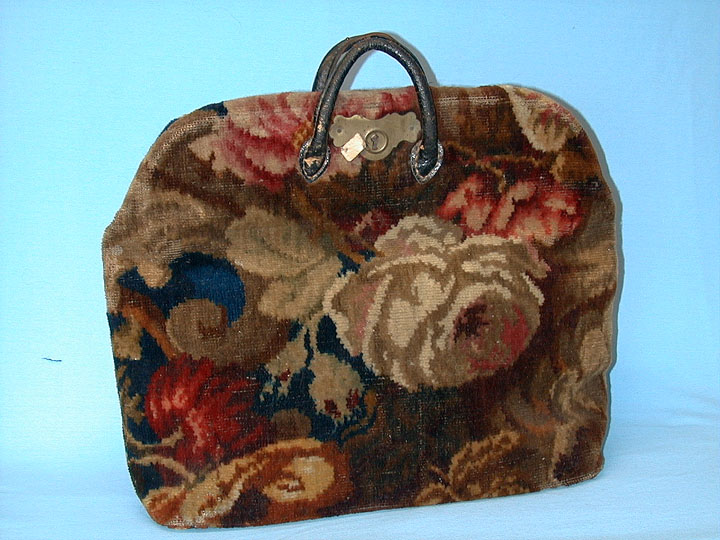
For an "overnight" stay... I have a carpet bag that will accommodate extra underpinnings, basic toiletries, and even a writing slope (but the slope won't stay level.. so the ink becomes a mess). I generally need to bring a set of dishes and projects... so the basket comes along for those. A mattress tick gets filled with straw at the event, a blanket (or several for cold events), and a pillow and I have a cozy sleeping pallet.
For an outdoor on-the-move scenario, a bedroll of blanket and ground cloth for bedding, basket for food and utensils and I can move with the best of them. I own a pack basket and a market wallet for scenarios where the lack of "ready menfolk" mean that a woman needs to carry a larger amount of communal "gear" for the group.
I gave some serious thought to the question and did a bit of (admittedly shallow) digging... and found that women seemed to be reaching for baskets more than bags for the day-to-day... a basket for market purchases, a basket to collect herbs, flowers, veggies, a basket to port laundry, a basket for sewing "stuff", a basket for knitting "stuff"... etc. So I try to make a basket my first inclination. Were the scenario to accommodate such... I might use a pillowcase instead of a bag or tie items into a large shawl and make a bundle of it.
To show a different side, I recently made a number of generally helpful carrying items for a Dear Friend who is a gentleman. I included a number of "poke sacks" of various sizes, a specially compartmentalized duffel bag for his specific impression with removable tidys, a period compartmentalized dishes/lunch carrier (based on a description I read in a period magazine, "sailor style" drawstring shoulder-sling duffel bag and a market wallet. (he declined a carpet bag or "carpet haversack" style bag, though there is plenty of reference for them)
Pouche Pompadour/ Traveling Sack
"Before Paper or Plastic: The Universal Basket" by Virginia Mescher
Carpet Bag
Bed Roll- Horse Collar style
Bed Roll- "Hobo" or "Short" style
Pack Basket
Pantry Box
Market Wallet
Poke Sack
"Sailor" Duffel (sailor-types sometimes call this a "ditty bag"
Travel Duffel
Carpet Haversack
Portmanteau
Valise, Satchel, Saddle Bag, Hunting Bag, and like
It will depend on what you need to carry. Modern women are accustomed to carrying everything possibly needed by everyone in their family. Such was not the case in the past. The first step is to give consideration to what you actually need to carry. Gents will find they need to carry more than they are accustomed to. Ladies will discover the freedom of carrying less... a lot less. Next step is to consider your impression and the choices they would be likely to make. A gent will be likely to go for bags and sacks. A lady will be likely to go for the universal basket.
What I do...
For nicer impressions where I need to carry small book, snack, and various event related papers... a traveling sack (also called a pouche pompadour) ...and the shawl, gloves, and parasol, of course
For a nicer impression where I need to add dishes, sewing kit, project to the above list.... a medium-small-ish basket of appropriately nice style covered with a fine linen napkin that maybe has some decorative edging or embroidery(for the whole lot, not both a traveling sack AND a basket)
For working class impressions where I need to carry a small book, snack, and various event related papers... a medium-small-ish basket of appropriately working-class style covered with a plain linen napkin
For working class impressions where I need to carry dishes, sewing kit, project in addition to the above list... a larger medium-small-ish basket covered with a plain linen napkin
The scenario in these instances would be a variation on "going to town/market/visiting"
For an "overnight" stay... I have a carpet bag that will accommodate extra underpinnings, basic toiletries, and even a writing slope (but the slope won't stay level.. so the ink becomes a mess). I generally need to bring a set of dishes and projects... so the basket comes along for those. A mattress tick gets filled with straw at the event, a blanket (or several for cold events), and a pillow and I have a cozy sleeping pallet.
For an outdoor on-the-move scenario, a bedroll of blanket and ground cloth for bedding, basket for food and utensils and I can move with the best of them. I own a pack basket and a market wallet for scenarios where the lack of "ready menfolk" mean that a woman needs to carry a larger amount of communal "gear" for the group.
I gave some serious thought to the question and did a bit of (admittedly shallow) digging... and found that women seemed to be reaching for baskets more than bags for the day-to-day... a basket for market purchases, a basket to collect herbs, flowers, veggies, a basket to port laundry, a basket for sewing "stuff", a basket for knitting "stuff"... etc. So I try to make a basket my first inclination. Were the scenario to accommodate such... I might use a pillowcase instead of a bag or tie items into a large shawl and make a bundle of it.
To show a different side, I recently made a number of generally helpful carrying items for a Dear Friend who is a gentleman. I included a number of "poke sacks" of various sizes, a specially compartmentalized duffel bag for his specific impression with removable tidys, a period compartmentalized dishes/lunch carrier (based on a description I read in a period magazine, "sailor style" drawstring shoulder-sling duffel bag and a market wallet. (he declined a carpet bag or "carpet haversack" style bag, though there is plenty of reference for them)
Pouche Pompadour/ Traveling Sack
"Before Paper or Plastic: The Universal Basket" by Virginia Mescher
Carpet Bag
Bed Roll- Horse Collar style
Bed Roll- "Hobo" or "Short" style
Pack Basket
Pantry Box
Market Wallet
Poke Sack
"Sailor" Duffel (sailor-types sometimes call this a "ditty bag"
Travel Duffel
Carpet Haversack
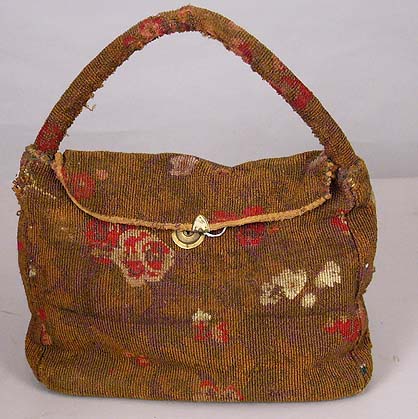
Portmanteau
Valise, Satchel, Saddle Bag, Hunting Bag, and like
Thursday, January 12, 2012
Advice for the Independant Age- continued
We return to the idea of advice manuals. We've explored the types of manuals available and some of the context of why they may have become so popular. In this posting, we'll explore how one can use age, interests, and experiences to choose which advice manual one's impression might be likely to reference using domestic medical advice manuals in example.
The history of medical thought was transitioning in this era. New theories were emerging to explain the whole of thought in relation to new discoveries. Alternatives to some of the more extreme treatments and medicines were being found, advertised to the medical community, and put into practice... or refuted as so much bunk. It was an exciting time for medicine with new discoveries and theories published as fast as the printing presses could run.
With the Spirit of Independence explained in the previous posting, it is easy to see a Jacksonian looking at the medical practices of the day and wanting to understand for him/herself why such invasive practices as blood-letting, violent purging, and cupping might be needed to treat his/her medical issue. The Jacksonian would also want to be an informed consumer when the visiting the apothecary. They turned to medical texts geared to the domestic market for this.
A person solicits advice at a turning point. One of the most prominent turning points in the life of a Jacksonian woman was the setting up of her own household, usually upon marriage. The women in her life would be very likely to offer her advice on setting up and running a household at this time. For the modern re-enactor/ living historian this is the first step toward figuring out which advice manual to reference. I'll use myself as an example. I'm currently 37 years old. If my impression is the same age, I'd have been born in 1825. The average age at marriage for the Jacksonian era is about 20, putting a likely marriage date in about 1845. To figure out which manuals my women friends would have bought for me, I should view publication dates between 1840 and 1845. Thus, I decide her Auntie gave her an edition of "Domestic Medicine, or a Treatise on the prevention and cure of diseases." That one has had a reprint many times, so Auntie would see a new edition with the same title she has used herself as a solid choice.
The next turning point in a Jacksonian woman's life was the birth of a child. The new mother constantly solicits advice from everyone to assure herself that she is "normal," her baby is developing "normal," and attempt to divine if her child is one of the lucky ones to survive and prosper. If she is particularly nervous or if things go amiss a new manual may be consulted for the most up-to-date information. Using myself as an example again, my impression has no children and that needs explaining. I often will use a childhood case of rickets weakening my bone structure to explain both a slight limp and several miscarriages. She would have consulted physicians, midwives, and the newest manuals for the most current theories on why she isn't "normal." Thus, she picks up "Domestic Medicine, or Poor Man's Friend".
Another turning point to many women of the mid-19th century was the start of the Civil War in 1861. My usual impression will be obligated to accept employment as a "matron" with the Women's Department for nursing. While there, she will meet other women. Each woman will bring her own learning and understanding of medical practice. Each woman will have an opinion on the challenges presented, based on the success or failure of various treatments she has experience with. (So do the surgeons, stewards, orderlies, and patients... but we'll confine this discussion to female nurses.) When a group of people with a shared interest meet, the exchange of ideas, opinions, experiences, and research flow free. Thus, a fellow female nurse suggests "The Household Physician" by Dr. Warren.
Continuing with that Jacksonian ideal of exchange of ideas, a friend may expand an impression's knowledge by suggestion. With the case of my impression, a steward was over-hearing a recipe from "The American Frugal Housewife" explained and noted it was similar to a prescription in Beasley's "The Book of Prescriptions." In fact, many of the ingredients were exactly the same, just expressed in scientific terms in Beasley's work.
A friend of mine, who also re-enacts, has MS. This sent our little research group into exploring how MS would have been viewed in period and what treatments may have been offered. We've discovered that her impression may have an interest in a period system of treatments called "hydrophathy." This would have lead her to a whole group of specialty advice manuals. She'd have picked up "Hydropathy: or, Hygienic medicine" and would have shared what she was learning.
For my impression, a shared interest in medical practice can logically lead me to be quite current in my medical knowledge and even have a limited knowledge of some alternative treatments. For several of my friends who don't share my zeal, they'd be content with Buchan and Gunn. For our Dear Newbie, she should start with editions close to her impression's marriage date and then work forward with turning points in her impression's life.
Explore domestic medical advice manuals for yourself:
William Buchan & William Cadogan "Domestic Medicine, or The family physician" 1772
William Buchan "Domestic Medicine, or a Treatise on the prevention and cure of diseases" 1791, revised and republished in 1805, 1809, 1813, and 1826
William Buchan "Domestic Medicine, or a Treatise on the prevention and cure of diseases" 1859
Dr. Gunn "Gunn's Domestic Medicine, or Poor Man's Friend" 1835
Dr. Ira Warren "The Household Physcian" 1859
Mrs. Child "The American Frugal Housewife" 1833
Henry Beasley "The Book of Prescriptions" 1855
Edward Wickstead Lane "Hydropathy: or, Hygienic medicine. An explanatory essay." 1859
The history of medical thought was transitioning in this era. New theories were emerging to explain the whole of thought in relation to new discoveries. Alternatives to some of the more extreme treatments and medicines were being found, advertised to the medical community, and put into practice... or refuted as so much bunk. It was an exciting time for medicine with new discoveries and theories published as fast as the printing presses could run.
With the Spirit of Independence explained in the previous posting, it is easy to see a Jacksonian looking at the medical practices of the day and wanting to understand for him/herself why such invasive practices as blood-letting, violent purging, and cupping might be needed to treat his/her medical issue. The Jacksonian would also want to be an informed consumer when the visiting the apothecary. They turned to medical texts geared to the domestic market for this.
A person solicits advice at a turning point. One of the most prominent turning points in the life of a Jacksonian woman was the setting up of her own household, usually upon marriage. The women in her life would be very likely to offer her advice on setting up and running a household at this time. For the modern re-enactor/ living historian this is the first step toward figuring out which advice manual to reference. I'll use myself as an example. I'm currently 37 years old. If my impression is the same age, I'd have been born in 1825. The average age at marriage for the Jacksonian era is about 20, putting a likely marriage date in about 1845. To figure out which manuals my women friends would have bought for me, I should view publication dates between 1840 and 1845. Thus, I decide her Auntie gave her an edition of "Domestic Medicine, or a Treatise on the prevention and cure of diseases." That one has had a reprint many times, so Auntie would see a new edition with the same title she has used herself as a solid choice.
The next turning point in a Jacksonian woman's life was the birth of a child. The new mother constantly solicits advice from everyone to assure herself that she is "normal," her baby is developing "normal," and attempt to divine if her child is one of the lucky ones to survive and prosper. If she is particularly nervous or if things go amiss a new manual may be consulted for the most up-to-date information. Using myself as an example again, my impression has no children and that needs explaining. I often will use a childhood case of rickets weakening my bone structure to explain both a slight limp and several miscarriages. She would have consulted physicians, midwives, and the newest manuals for the most current theories on why she isn't "normal." Thus, she picks up "Domestic Medicine, or Poor Man's Friend".
Another turning point to many women of the mid-19th century was the start of the Civil War in 1861. My usual impression will be obligated to accept employment as a "matron" with the Women's Department for nursing. While there, she will meet other women. Each woman will bring her own learning and understanding of medical practice. Each woman will have an opinion on the challenges presented, based on the success or failure of various treatments she has experience with. (So do the surgeons, stewards, orderlies, and patients... but we'll confine this discussion to female nurses.) When a group of people with a shared interest meet, the exchange of ideas, opinions, experiences, and research flow free. Thus, a fellow female nurse suggests "The Household Physician" by Dr. Warren.
Continuing with that Jacksonian ideal of exchange of ideas, a friend may expand an impression's knowledge by suggestion. With the case of my impression, a steward was over-hearing a recipe from "The American Frugal Housewife" explained and noted it was similar to a prescription in Beasley's "The Book of Prescriptions." In fact, many of the ingredients were exactly the same, just expressed in scientific terms in Beasley's work.
A friend of mine, who also re-enacts, has MS. This sent our little research group into exploring how MS would have been viewed in period and what treatments may have been offered. We've discovered that her impression may have an interest in a period system of treatments called "hydrophathy." This would have lead her to a whole group of specialty advice manuals. She'd have picked up "Hydropathy: or, Hygienic medicine" and would have shared what she was learning.
For my impression, a shared interest in medical practice can logically lead me to be quite current in my medical knowledge and even have a limited knowledge of some alternative treatments. For several of my friends who don't share my zeal, they'd be content with Buchan and Gunn. For our Dear Newbie, she should start with editions close to her impression's marriage date and then work forward with turning points in her impression's life.
Explore domestic medical advice manuals for yourself:
William Buchan & William Cadogan "Domestic Medicine, or The family physician" 1772
William Buchan "Domestic Medicine, or a Treatise on the prevention and cure of diseases" 1791, revised and republished in 1805, 1809, 1813, and 1826
William Buchan "Domestic Medicine, or a Treatise on the prevention and cure of diseases" 1859
Dr. Gunn "Gunn's Domestic Medicine, or Poor Man's Friend" 1835
Dr. Ira Warren "The Household Physcian" 1859
Mrs. Child "The American Frugal Housewife" 1833
Henry Beasley "The Book of Prescriptions" 1855
Edward Wickstead Lane "Hydropathy: or, Hygienic medicine. An explanatory essay." 1859
Thursday, January 5, 2012
Advice for the Independant Age, in two parts
Our Dear Newbie is ready to branch out and explore a bit. She'd like to know what her household would be like in the mid-19th century. Her mentors, like their mid-19th century counterparts, are quick to offer a dizzying array of advice manuals from the period. ...but which one to trust? In the first part of this series, we'll look at why advice manuals became popular and some of the various types of advice manuals. In the next part, we'll take one selection "domestic medicine" and trace the factors in selecting which manual your impression likely consulted.
Why advice manuals rather than consult a professional? During the Jacksonian Era, America was caught up in an independent spirit. Authority was distrusted. The Common Man doing for himself and his family was held to the highest standard. Education and knowledge was not just for the elite few, any person with the desire to know could explore for themselves. Anyone with the desire to share information could write a pamphlet, treatise, or text... and many did just that.
What types of advice manuals were written? Many of the most well-known today include the "Every Man His Own..." and the "Beadle's Dime Guide to..." books. From such booklets, the Jacksonian man or woman could learn the basics of a variety of professional and artisan skills including law, medicine, tailoring, dress-making, shoe-making, veterinary medicine, brokering, gardening, brewing, horse training... to name a few. (See the links to Google Books below)
Many women lent their pens to the trend in recipe books and cooking manuals in this era. These often included not only recipes for every day meals but fancy meals, entertainment advice, household cleaners, caring for household items, caring for sick persons, caring for and feeding children, and even governing servants. Even Robert Roberts, an African-American butler, in 1827 thought to advise fellow servants in his work, "The House Servant's Directory."
Medical practitioners got in the act, too... and home medical guides were very well received by the public. (more on that in the second part of the series.)
In an age where success in society was based on present behavior rather than accident of birth, folks wishing to be successful depended on etiquette advice manuals to avoid a success-killing faux pas. In these books the lives of society persons were dissected for how to dress for every occasion, how to write communiques and to whom, how to pay calls, how to walk in the street, how to talk to people and who not to, how to mourn beautifully, how to select staff and how to let them go... even how to conduct oneself in business.
Thus we see that a spirit of independence and DIY ambition led to advice manuals being written on almost any topic one cared to explore. When we continue, we'll use domestic medicine guides to explore which manual Dear Newbie's impression might reference.
Some of the varied "Every Man His Own..." books:
Every Man His Own Trainer, or How to Develop, Condition, and Train a Trotter or Pacer 1889
Every Man His Own Art Critic 1888
Every Man His Own Cattle Doctor 1825
Every Man His Own Brewer 1768
Every Man His Own Gardener 1841
Every Man His Own Gardener 1813
The Family Physician, or Every Man His Own Doctor 1835
Every Woman Her Own House-Keeper 1796
"The House Servant's Directory" by Robert Roberts
A few of the earliest American recipe books and domestic advice manuals:
Feeding America, The Historic American Cookbook Project
Etiquette Manuals:
Rules of Etiquette and Home Culture, or What to do and how to do it 1889
Self Instruction in Practical Business Qualifications 1890
The Gentleman's Book of Etiquette and Manual of Politeness 1860
Etiquette: Social Ethics and the Courtesies of Society 1854
Why advice manuals rather than consult a professional? During the Jacksonian Era, America was caught up in an independent spirit. Authority was distrusted. The Common Man doing for himself and his family was held to the highest standard. Education and knowledge was not just for the elite few, any person with the desire to know could explore for themselves. Anyone with the desire to share information could write a pamphlet, treatise, or text... and many did just that.
What types of advice manuals were written? Many of the most well-known today include the "Every Man His Own..." and the "Beadle's Dime Guide to..." books. From such booklets, the Jacksonian man or woman could learn the basics of a variety of professional and artisan skills including law, medicine, tailoring, dress-making, shoe-making, veterinary medicine, brokering, gardening, brewing, horse training... to name a few. (See the links to Google Books below)
Many women lent their pens to the trend in recipe books and cooking manuals in this era. These often included not only recipes for every day meals but fancy meals, entertainment advice, household cleaners, caring for household items, caring for sick persons, caring for and feeding children, and even governing servants. Even Robert Roberts, an African-American butler, in 1827 thought to advise fellow servants in his work, "The House Servant's Directory."
Medical practitioners got in the act, too... and home medical guides were very well received by the public. (more on that in the second part of the series.)
In an age where success in society was based on present behavior rather than accident of birth, folks wishing to be successful depended on etiquette advice manuals to avoid a success-killing faux pas. In these books the lives of society persons were dissected for how to dress for every occasion, how to write communiques and to whom, how to pay calls, how to walk in the street, how to talk to people and who not to, how to mourn beautifully, how to select staff and how to let them go... even how to conduct oneself in business.
Thus we see that a spirit of independence and DIY ambition led to advice manuals being written on almost any topic one cared to explore. When we continue, we'll use domestic medicine guides to explore which manual Dear Newbie's impression might reference.
Some of the varied "Every Man His Own..." books:
Every Man His Own Trainer, or How to Develop, Condition, and Train a Trotter or Pacer 1889
Every Man His Own Art Critic 1888
Every Man His Own Cattle Doctor 1825
Every Man His Own Brewer 1768
Every Man His Own Gardener 1841
Every Man His Own Gardener 1813
The Family Physician, or Every Man His Own Doctor 1835
Every Woman Her Own House-Keeper 1796
"The House Servant's Directory" by Robert Roberts
A few of the earliest American recipe books and domestic advice manuals:
Feeding America, The Historic American Cookbook Project
Etiquette Manuals:
Rules of Etiquette and Home Culture, or What to do and how to do it 1889
Self Instruction in Practical Business Qualifications 1890
The Gentleman's Book of Etiquette and Manual of Politeness 1860
Etiquette: Social Ethics and the Courtesies of Society 1854
Friday, September 9, 2011
Busting Myths Series: "Circular No. 8" by Dorthea Dix
We’re contemplating a beloved myth today and trying to get
to the bottom of why this myth went the direction it did.
Many female re-enactors/living historians of mid-19th
century American history have considered portraying one of the many women who
answered the call for female nurses/matrons in military hospitals during the
(American) Civil War. The Dear Newbie is quickly informed by a Mentor that
Dorthea Dix issued very strict guidelines on the physical and fashionable
attributes of a female nurse… and one either goes with the dictates or fights
valiantly against them. Some of the dictates are based in fact and have been
taken a bit out of context. Age
restriction is an example. Some of the dictates are practical suggestions that
have been written down as dictates in later memoirs. “No hoops” is one such
example. Some of the dictates are so
much bunk, such as “must be ugly.”
In the following posting I will take Miss Dix’s “Circular
No. 8” and address how the phrasing was interpreted and extrapolated… giving birth to the myth of the attire and
physical attributes of female nurses/matrons of the Civil War era.
___________________________________________
Circular No. 8., by
Dorothea Dix
Washington, D. C., July 14, 1862,
Washington, D. C., July 14, 1862,
No candidate for
service in the Women's Department for nursing in the Military Hospitals of the
United States, will be received below the age of thirty-five years, nor above
fifty.
This is frequently interpreted to mean that the efforts of young women aren’t worthy. In truth, she needed women who were mature enough to handle the tasks they would be set with delicacy, tact, practicality, and sheer cussedness when needed, yet young and spry enough to handle hard, physical work in often primitive conditions. Miss Dix mentored a number of women who were younger than the requirement and saw to the placement of others. Several of our most beloved nurses/matrons were above the age requirement… but these spry elder women gave their all to serve. There are records of women who were denied admittance to the Women’s Dept. who went on to serve as nurses/matrons in different ways. We must remember that Miss Dix’s appointees account for only 6% of the females who served as nurses/matrons.
This is frequently interpreted to mean that the efforts of young women aren’t worthy. In truth, she needed women who were mature enough to handle the tasks they would be set with delicacy, tact, practicality, and sheer cussedness when needed, yet young and spry enough to handle hard, physical work in often primitive conditions. Miss Dix mentored a number of women who were younger than the requirement and saw to the placement of others. Several of our most beloved nurses/matrons were above the age requirement… but these spry elder women gave their all to serve. There are records of women who were denied admittance to the Women’s Dept. who went on to serve as nurses/matrons in different ways. We must remember that Miss Dix’s appointees account for only 6% of the females who served as nurses/matrons.
Only women of strong
health, not subjects of chronic disease, nor liable to sudden illnesses, need
apply. The duties of the station make large and continued demands on strength.
This passage is frequently forgotten when Miss Dix is
quoted. Health is a very important prerequisite for ensuring the health of
others. With frequent epidemics of childhood diseases and filth diseases
running through hospitals and camps, finding candidates who are least
susceptible to illnesses is critical for keeping the hospitals running
efficiently and care coming consistently.
Matronly persons of
experience, good conduct, or superior education and serious disposition, will
always have preference; habits of neatness, order, sobriety, and industry, are
prerequisites.
With this phrase
comes the reference to “matronly persons”… which has come to mean “old &
ugly” or in other ways “not attractive.” One can see from the phrasing that it
is not meant so here. “Matronly” simply meant “motherly” and in a culture that
gave the highest forms of respect to a Mother, being considered “motherly” was
the highest praise one could bestow.
The likely reasoning the rest of the requirements were
listed could have to do with the types of female persons employed in hospitals prior
to this war. Such women were given
domestic and scutt work… such as cleaning up, removing refuse, and watching
over patients for very long, boring periods of time. Women who had been
convicted of crimes or forced to charity work-houses were seen as appropriate
candidates for such positions. Many such women had a reputation for slovenly
dress, apathy towards tasks, disruptive and belligerent behavior and a tendency
toward alcoholism. With the creation of the Women’s Dept. being a sort of
“grand experiment,” those in charge wanted to disassociate themselves from such
reputations.
All applicants must
present certificates of qualification and good character from at least two
persons of trust, testifying to morality, integrity, seriousness, and capacity
for care of the sick.
Obedience to rules of the service, and conformity to special regulations, will be required and enforced.
Compensation, as regulated by act of Congress, forty cents a day and subsistence. Transportation furnished to and from the place of service.
Obedience to rules of the service, and conformity to special regulations, will be required and enforced.
Compensation, as regulated by act of Congress, forty cents a day and subsistence. Transportation furnished to and from the place of service.
This Circular is essentially an employment advertisement and
much of this phrasing is simply that… detailing the job expectations. This is
also often forgotten in quoting Miss Dix’s Circular.
Amount of luggage
limited within small compass.
Dress plain, (colors brown, grey, or black,) and while connected with the service without ornaments of any sort.
Dress plain, (colors brown, grey, or black,) and while connected with the service without ornaments of any sort.
This is the phrase that made the biggest impression to
potential nurses/matrons… because almost all who set their experiences down on
paper spent a bit of ink detailing what they took with them and what they
thought practical to wear. From a practical standpoint, the hospitals to which
the women would be assigned were primitive, with space at a premium and devoted
mostly to the patients… reminding
potential nurses/matrons that it was prudent to pack light, small, and
practical was simply good sense. Likewise was it good sense to remind the women
that clothing needed to be sturdy and able to see hard use.
In 1895, one former nurse detailed her interpretation of
“Circular No. 8” in her memoirs and she has been much quoted since. Mary A.
Gardener Holland writes in her book Our
Army Nurses, “Later, I procured one of Miss Dix's circulars, and read it
again and again. It appeared to me a queer demand. It read like this : "
No woman under thirty years need apply to serve in government hospitals.
All nurses are required to be very plain-looking women. Their dresses must be
brown or black, with no bows, no curls, or jewelry, and no hoop-skirts." It was fashionable at that time to wear immense
hoops. I had worn one for some time, and really felt it a sacrifice to leave it
off. Other requirements were agreeable, but I felt I could not walk without a
hoop. I said, " Well, if I can't walk without it, I will crawl ; for I
must go, and I will do the best I can."
While many women serving as nurses/matrons may quickly have
found the practicality of wearing layers of petticoats instead of a cage
crinoline… Miss Dix’s “Circular No. 8” clearly leaves the decision to each
individual applicant. Fellow researchers surmise that Mrs. Gardener Holland’s
listing of ornaments that weren’t permitted may have been an author clarifying
for contemporaries (the book was published 30 years after the events described)
what would have constituted “ornaments” at the time the events were taking
place.
No applicants accepted
for less than three months service; those for longer periods always have
preference.
Approved, William A. Hammond, Surgeon General."
Approved, William A. Hammond, Surgeon General."
This passage is more “employment advertisement-speak” that
is not often quoted. The preference for longer than three month availability
probably comes from wanting a sufficient employment period from an employee to
off-set the amount of training they needed. Many former nurses/matrons remember
the first month as a type of “on the job training.”
With the approval of the military medical department, the
Women’s Department for nursing paved the way for women to serve in military
hospitals. Miss Dix’ s “Circular No. 8” provided the guidelines and helpful
suggestions these women needed to evaluate if the service was an appropriate
way for them to serve, prepare themselves to transition to this new lifestyle,
and better understand what was to be expected of them.
Each former nurse/matron remembered her own interpretation
of “Circular No. 8” and the impact it had on her employment. From looking at
only a memoir or two, and those written many years after the issuance, modern
re-enactors/living historians are only getting an interpretation of a
document... and can easily perpetuate a myth if the actual document is not
examined.
View a copy of an original "Circular No. 8" at the National Archives Digital Vault
Read a copy of Our Army Nurses by Mary A. Gardener Holland
Read further memoirs by former nurses/matrons:
Read further on Female Nurses/Matrons of the American Civil War Army:
Wednesday, August 10, 2011
Everything...AND the kitchen sink...
A group of Dear Newbies are contemplating the kitchen today. They are bemoaning the hours the kitchen, or in military parlance "mess", takes to set up, the hours it takes to tear down, the space it takes to store and the hassle of transporting this much "stuff" to the average three day event.
Wouldn't it be nice to scale down... but how does one go about doing so?
With a few considerations, scaling down on the kitchen should be easy... if one is willing to commit to doing so and firm with their group that this is the "way to go."
Consideration 1) Refrigerated Items. Bringing fewer items that need refrigeration will eliminate the coolers, the ice, and the period justified containers to disguise the coolers.
Practical Example: Please consult this simply wonderful article written by a friend, Elizabeth Stewart Clark. She has filled the article with common sense on why to do without refrigeration and some fabulous practical suggestions for doing so. No Refridgeration Required by Elizabeth Stewart Clark
Consideration 2) Cooked Items. Bringing fewer items that need cooking will eliminate some of the cookware and some of the firewood needed. Fewer items needing cooked will also get one away from the fire and out to enjoy the event. :-)
Practical Example: Many items can be prepared at home... breads, baked goods, veggies, hard cheeses, hard meats like summer sausage...
Consideration 3) Ingredients. Coordinating a menu to make the most of left-overs can mean less ingredients need to be brought. Combining seasonings into pre-made packets ahead can eliminate the need for spice containers and measuring implements. Preparing chopped items ahead will eliminate the need to bring cutting surfaces and specialty knives.
Practical Example: One meal we have ham slices... in a later meal, we have bean soup with ham pieces. One meal we have fried chicken... a later meal we have chicken salad. (think of the after-Thanksgiving parade of turkey dishes... turkey sandwich, turkey pie, turkey salad, stewed turkey, turkey broth soup... BLEH!! enough with the turkey already!!) ...and this is a period idea too, showing up in period housekeeping advice manuals. :-)
Consideration 4) Purpose. In addition to coordinating menu items to make the most of fewer ingredients, investing in cookware and serve-ware that will serve more than one purpose will allow one to scale down their kitchen. Choosing to go without dishes that require a specialty cookware piece or serve-ware piece will also scale down the kitchen.
Practical Example: A dutch oven can be used for stews, baking, heating, and washing up... but.... much as we love ice cream, the ice cream churn can only be used for ice cream. (WAIT!!... ice cream is maybe WORTH bringing the specialty item :-p )
Consideration 4) SHARE! Coordinating meals with others means each person can bring less "stuff'" and also means the person buying the meal ingredients can buy in cheaper bulk quantity, keeping the cost down for all contributors.
Practical Example: One family brings a skillet, one family brings a coffee kettle, one family brings wash basins... voila... your kitchen is shaping up fast and your family only had to pack one item. Same with ingredients.. one family brings an entree, one family brings potatoes, one family brings beverages... "pot luck" works!
Consideration 5) Keep it Period. Some dishes we traditionally enjoy at lunch and supper, the O.C. would have enjoyed at breakfast as left-overs. A series of small snacks throughout the day can mean the meals will be less involved. Less involved meals means less of just about everything.
Practical Example: Left over cornbread and ham for breakfast... not as traditional as eggs, potatoes, and bacon... but it's hearty and filling, uses left-overs, didn't require extra cookware, and tides us over until apples and cheese at mid-morning, which tides us over until a more involved meal at lunch.
And a practical example of several considerations: Bringing dish-cloths to dry the dishes and clothesline to dry the cloths takes up less space than a bamboo dish drainer contraption.... and the dish-cloths can wrap delicate items in transport.
The "hard core" civilians go on a tactical:
Scenario: 3 people need to eat Supper on Friday, Breakfast, Lunch, Supper on Saturday, and Breakfast and Lunch on Sunday. We would be on the move the whole event, without refrigeration and limited cooking opportunities.
What we planned:
Friday Supper: Ham, Biscuits, Lemonade
Saturday Breakfast: Farina, Peaches, Tea, Sugar & Milk
Saturday Lunch: Sausage, Cheese, Biscuits, Lemonade
Saturday Supper: Ham, Sweet Biscuits, Tea, Sugar, Milk
Sunday Breakfast: Farina, Peaches, Tea, Sugar, Milk
Sunday Lunch: Whatever is left
Snacks: Nuts, peppermint sticks, apples
How we packed:
Ham: pre-cooked and pre-sliced, wrapped in paper
Biscuits: pre-baked, in a pasteboard box
Hard Sausage: in natural casing
Hard Cheese: wrapped in paper
Sweet Biscuits: pre-baked, in pasteboard box
Farina: (actually instant Cream-Of-Wheat) in a "poke sack"
Peaches: tinned, with modern label replaced with period one
Tea: loose-leaf, in a "poke sack"
Sugar: in a tin container
Milk: Evaporated Milk (not the sweetened kind) with the modern label replaced with a period reproduction
Lemonade: powdered, in single serving paper envelopes.
A Knife
A Can Punch
A Tin Tea Kettle
Matches in a Match-safe
Hatchet (for cutting firewood and fire breaks)
The boxes were placed in a pack-basket, with the sacks and tins nestled around them. We two ladies each carried a basket with bowl, ginger beer bottle, cutlery, and glass for ourselves covered with a napkin... I carried the gent's bowl, cutlery, glass, bottle and the tea kettle in a market wallet. The gent carried the pack basket on his back by the shoulder straps and the can punch and match-safe in his pocket. He used his handkerchief for a napkin. We took turns carrying the hatchet. (The other Dear Lady carried bedding for both herself and the gent; thus, she carried minimal of the kitchen things, but more than her share of "stuff.")
So... scaling down CAN be done. Perhaps you aren't quite ready to scale down as much as the "hard core" civilians yet, but you are now ready to give some serious consideration to your period kitchen at events. Soon you will have the zen of "Less really is more."
Wouldn't it be nice to scale down... but how does one go about doing so?
With a few considerations, scaling down on the kitchen should be easy... if one is willing to commit to doing so and firm with their group that this is the "way to go."
Consideration 1) Refrigerated Items. Bringing fewer items that need refrigeration will eliminate the coolers, the ice, and the period justified containers to disguise the coolers.
Practical Example: Please consult this simply wonderful article written by a friend, Elizabeth Stewart Clark. She has filled the article with common sense on why to do without refrigeration and some fabulous practical suggestions for doing so. No Refridgeration Required by Elizabeth Stewart Clark
Consideration 2) Cooked Items. Bringing fewer items that need cooking will eliminate some of the cookware and some of the firewood needed. Fewer items needing cooked will also get one away from the fire and out to enjoy the event. :-)
Practical Example: Many items can be prepared at home... breads, baked goods, veggies, hard cheeses, hard meats like summer sausage...
Consideration 3) Ingredients. Coordinating a menu to make the most of left-overs can mean less ingredients need to be brought. Combining seasonings into pre-made packets ahead can eliminate the need for spice containers and measuring implements. Preparing chopped items ahead will eliminate the need to bring cutting surfaces and specialty knives.
Practical Example: One meal we have ham slices... in a later meal, we have bean soup with ham pieces. One meal we have fried chicken... a later meal we have chicken salad. (think of the after-Thanksgiving parade of turkey dishes... turkey sandwich, turkey pie, turkey salad, stewed turkey, turkey broth soup... BLEH!! enough with the turkey already!!) ...and this is a period idea too, showing up in period housekeeping advice manuals. :-)
Consideration 4) Purpose. In addition to coordinating menu items to make the most of fewer ingredients, investing in cookware and serve-ware that will serve more than one purpose will allow one to scale down their kitchen. Choosing to go without dishes that require a specialty cookware piece or serve-ware piece will also scale down the kitchen.
Practical Example: A dutch oven can be used for stews, baking, heating, and washing up... but.... much as we love ice cream, the ice cream churn can only be used for ice cream. (WAIT!!... ice cream is maybe WORTH bringing the specialty item :-p )
Consideration 4) SHARE! Coordinating meals with others means each person can bring less "stuff'" and also means the person buying the meal ingredients can buy in cheaper bulk quantity, keeping the cost down for all contributors.
Practical Example: One family brings a skillet, one family brings a coffee kettle, one family brings wash basins... voila... your kitchen is shaping up fast and your family only had to pack one item. Same with ingredients.. one family brings an entree, one family brings potatoes, one family brings beverages... "pot luck" works!
Consideration 5) Keep it Period. Some dishes we traditionally enjoy at lunch and supper, the O.C. would have enjoyed at breakfast as left-overs. A series of small snacks throughout the day can mean the meals will be less involved. Less involved meals means less of just about everything.
Practical Example: Left over cornbread and ham for breakfast... not as traditional as eggs, potatoes, and bacon... but it's hearty and filling, uses left-overs, didn't require extra cookware, and tides us over until apples and cheese at mid-morning, which tides us over until a more involved meal at lunch.
And a practical example of several considerations: Bringing dish-cloths to dry the dishes and clothesline to dry the cloths takes up less space than a bamboo dish drainer contraption.... and the dish-cloths can wrap delicate items in transport.
The "hard core" civilians go on a tactical:
Scenario: 3 people need to eat Supper on Friday, Breakfast, Lunch, Supper on Saturday, and Breakfast and Lunch on Sunday. We would be on the move the whole event, without refrigeration and limited cooking opportunities.
What we planned:
Friday Supper: Ham, Biscuits, Lemonade
Saturday Breakfast: Farina, Peaches, Tea, Sugar & Milk
Saturday Lunch: Sausage, Cheese, Biscuits, Lemonade
Saturday Supper: Ham, Sweet Biscuits, Tea, Sugar, Milk
Sunday Breakfast: Farina, Peaches, Tea, Sugar, Milk
Sunday Lunch: Whatever is left
Snacks: Nuts, peppermint sticks, apples
How we packed:
Ham: pre-cooked and pre-sliced, wrapped in paper
Biscuits: pre-baked, in a pasteboard box
Hard Sausage: in natural casing
Hard Cheese: wrapped in paper
Sweet Biscuits: pre-baked, in pasteboard box
Farina: (actually instant Cream-Of-Wheat) in a "poke sack"
Peaches: tinned, with modern label replaced with period one
Tea: loose-leaf, in a "poke sack"
Sugar: in a tin container
Milk: Evaporated Milk (not the sweetened kind) with the modern label replaced with a period reproduction
Lemonade: powdered, in single serving paper envelopes.
A Knife
A Can Punch
A Tin Tea Kettle
Matches in a Match-safe
Hatchet (for cutting firewood and fire breaks)
The boxes were placed in a pack-basket, with the sacks and tins nestled around them. We two ladies each carried a basket with bowl, ginger beer bottle, cutlery, and glass for ourselves covered with a napkin... I carried the gent's bowl, cutlery, glass, bottle and the tea kettle in a market wallet. The gent carried the pack basket on his back by the shoulder straps and the can punch and match-safe in his pocket. He used his handkerchief for a napkin. We took turns carrying the hatchet. (The other Dear Lady carried bedding for both herself and the gent; thus, she carried minimal of the kitchen things, but more than her share of "stuff.")
So... scaling down CAN be done. Perhaps you aren't quite ready to scale down as much as the "hard core" civilians yet, but you are now ready to give some serious consideration to your period kitchen at events. Soon you will have the zen of "Less really is more."
Friday, July 15, 2011
Are you HOT in that?
"Are you hot in that?"
Dear Newbie hears this several times during the average event. Persons hoping to have history shared with them use this phrase to open a dialogue so the sharing can begin.
Today I'll explore how living historians can prepare for the heat and humidity, so they can calmly reply, " Hot? Well, some g'hals/b'hoys think so. (*Wink)"
The first part of preparation is knowledge. Knowing the symptoms of heat emergencies and how your particular body chemistry reacts to heat extremes will allow you to asses how you will meet the challenges.
Some common issues associated with heat include:
Sunburn- Redness and pain in the skin. In severe cases there is also swelling, blisters, fever, and headaches.
Heat Cramps - Heavy sweating and painful spasms usually in the leg or abdomen muscles.
Heat Exhaustion - The person becomes weak and is sweating heavily. The skin is cold, pale and clammy. The pulse becomes thready. Fainting and vomiting accompanies heat exhaustion.
Heatstroke/Sunstroke - High body temperature (106 degrees or higher) along with hot dry skin and a rapid and strong pulse. Unconsciousness is possible.
Another important piece of information to know is weather advisories from the National Weather Service. Everyone has a favorite media outlet for weather advisories, but it's important to be aware when advisories are given.
Advice is given by health professionals on precautions to take in the heat. They include things like dressing properly, hydrating sufficiently, and monitoring active activities. We as living historians would prefer to do so in a period correct manner. Let's explore each of those thoughts further.
Dressing properly for hot weather, in a period correct manner.
A head-covering with ample shade for the face and neck is a must.
For women, girls, and toddler boys, a sunbonnet does a bully job. Sunbonnets come in many styles and for all "economic levels" of impressions. The "mailbox" slat bonnet is a classic choice, but shorter slat bonnets can be had with confidence. A variety of sunbonnets that use cording to stiffen the brim are quite appropriate and can look quite pretty. For young ladies,girls, and toddler boys, a wide brimmed straw hat may be used instead. Please use care to select a period correct base trimmed appropriately from a reputable vendor.
For men and older boys, a wide brimmed straw hat will do wonders to keep sunburn at bay. A number of felt hats are offered in wide-brimmed options, but the wool felt may get warm. Again, a period appropriate style from a reputable vendor is a must.
Women and young ladies who wear fashion bonnets will also want a parasol. When your amicable companions are assembled for the event, the ladies with parasols in your group should practice opening, closing, and moving their parasols to avoid endangering their companions.
Wearing loose weave, light colored clothing is another good suggestion. Wearing clothing of all natural fibers is important too.
Women, girls, and toddler boys have many sheer fabrics options. For those ladies who have issues with "chafing" in hot weather, I recommend that drawers are a must for you. Powder may help too. Using a cage crinoline will eliminate the need for a multitude of petticoats, eliminating a few layers for you. Just remember to do as the Original Cast did and wear at least one under and one over the cage. Fabric with some drape to it will create and move breezes, so don't skimp on the skirt fabric and consider pagoda or other open style sleeves. From an historic standpoint, under-sleeves are optional with "sheer" dresses. That is a way for adult women to have almost "bare arms" while still having full length sleeves on the dress. You might consider one of the v-neck fashion styles, or for young folks a bateau neckline. You'd be surprised how much cooler just that little bit of bareness feels.
Men and older boys will need to use light layers. Linen was a popular "suit" choice for gents in hot areas and was almost universally seen with white or cream backgrounds. If you use linen for trousers, you'll want drawers too. (hey! it's a family hobby and we'd like to keep it that way.) You can use a firm-woven cotton or linen for summer-weight drawers. Don't be afraid to go without coat or vest when the situation lends itself to such casualness. "The Rules" say that men weren't seen without a vest, but the historic record shows us that The Rules bended in certain situations.
I will caution that going barefoot in a re-enactment/living history camp is not a wise choice. There are many things on the ground that may be very dangerous to step on. Placing the bare feet in cool water temporarily can do wonders to cool a person off, though. Allowing young folks to "play" in water, such as a laundry display, precious metals prospecting, model boat races, or such, may help them keep cool and occupied.
Your family will want an extra change of chemises, shirts, drawers, and stockings for hot weather events. Fresh underpinnings can do wonders in making you feel fresh and cool(er.)
A kerchief can be worn wet along the neckline to help regulate body temperature. Period tales include wearing a large cabbage leaf on the head under the hat will help a person keep cool moisture close to the head and therefore, the person feels cooler.
My final thought on "dressing" for hot weather is SUNSCREEN. While you probably wouldn't trust a period recipe for sunscreen, and they did have them, wearing sunscreen is a must for many living historians. My "usual" brand looks like many of the ointments used in period toilette. I choose a period looking container, have my buddies at Paw Print Productions create a period-esque label, and I can carry my sunscreen to events without breaking my fellow companions' period moments. (Links below)
Hydrating Sufficiently
DRINK YOUR WATER is heard every summer from every media outlet and mother. The mid-19th century was an era where the drinking of copious amounts of water was suspect. Who can really blame them, when their water was not filtered as ours is. With the advances in technology, we can be secure that our water is (mostly) safe to drink, so we have no excuse not to. Event organizers generally go to great lengths to make certain sufficient safe water is available for the use of participants. With the Mother Bonnet firmly in place, I say a resounding, "DRINK YOUR WATER."
Period containers for water can be had relatively cheaply. The military gents have their canteens and tin cups. The citizens can choose from a variety of period appropriate containers. Some excellent options include: ginger beer bottles, un-labelled wine bottles, wicker covered bottles, pottery jugs, pitchers in options from stoneware and red-ware to fine china and silver, tumblers of glass, or china, tin cups, silver cups, glass or crystal goblets or in a pinch a tea cup or coffee mug will serve. I've even seen a beautiful transfer-ware china canteen.
For those who choose to "live off the land" as part of their event, water purification tablets are available in the camping and world travel sections of your local store. Read the instructions carefully and use as instructed.
For those with very young children or nursing mothers, bringing a container of water from home is a good idea. Children are very sensitive to taste and you want to be certain they have water that "tastes like water" to them. Some event organizers contract their water from wells, springs, and sources that may taste a bit different. ...and if the tot accustomed to a "sippy cup" is getting as much water down his/her front than down the gullet, s/he will be all the cooler for it as the water dries.
Those who prefer other beverages to "plain water" might enjoy lemonade, either made with real lemons or lemonade powder, switchel, fruit vinegar water, or ices. Lemonade powder was available in the mid-19th century. Switchel and fruit vinegar water are variations of a drink mixture my group refers to as "period Gatorade." It includes equal parts honey or molasses and vinegar (switchel= apple cider vinegar, fruit vinegar water= fruit flavored vinegar), diluted in water. Ices include a variety of period drinks, most of which include fruit, sugar, and iced water. (see the cookbook link below for specifics.)
You will want to start switching over to period drinks and drinking more water several weeks before the event and continue to drink lots of water for several days after the event to give your body enough time to adjust to a change in routine.
Monitoring Active Activities
In period, folks knew to do the heavy work in the early morning and include a rest time at the end of a long day. Ladies knew that planning a companionable time to sit in the shade and visit was best planned for early afternoon. And boys have long touted the benefits of a convenient creek in the shady woods on a hot summer day. Some may smile at the "quaint" romantic ideas, but there is something to those ideas. They understood what their bodies needed in relation to hot weather. We can do the same at our events.
It is important in this time of air conditioned buildings and vehicles to become accustomed to life without air conditioning slowly, in small doses, so as not to shock the system. Find a walking trail near where you are and plan progressively longer walks in the heat. Be sure to take plenty of water with you. Don't be embarrassed to rest and stop when you need to...and don't be frustrated if you can only do short bursts at first. You will be surprised how quickly you are able to go longer distances and remain out for longer time periods.
At the event, try to locate your tent near shade if you can. A fly placed over the tent (military style) will add an extra layer of shade to your sleeping quarters. Under canvas may still be hot, but it beats the blazing heat. Locate those water distribution points and the professional EMTs. Plan to make use of the ice vendors if the event has them available.
You will want to plan your most active activities for early in the day. You will want to plan your sedate visits or possibly a nap for mid-day and early afternoon. Early afternoon is a good time for the children to find the creek or water tub.
A campfire will serve to keep insects away, so cooking a meal or snack in the evening is beneficial. Plan for a lunch that doesn't need cooking, so you don't need to be around the added heat of a fire at mid-day. Keep the cool drinks coming throughout the day. Monitor your food items that need to be kept cool regularly.
Remember that it is very easy to forget to monitor your health in the excitement of the event. Try to plan your activities with plenty of flexibility, so you can allow yourself time to "do everything" safely. Check on children and "neighbors" who may not be monitoring themselves effectively.
Therefore if you plan ahead, check for advisories, dress properly, hydrate sufficiently, and monitor your active activities, you should be able to attend a hot event with confidence.
Am I hot in that?
Some b'hoys think so. :-p
Links:
The National Weather Service
Heat Safety from the National Weather Service
Heat Safety from the CDC
Dos and Don'ts for Hot Weather and Refreshing Summer Beverages by Virginia Mescher
An extensive site with many, Many wonderful period cookbooks
100+ Recipes from the 19th Century for Fruit Vinegar and Shrub compiled by Elaine Kessinger
China containers that work well for ointments and creams... like sunscreen
Wood containers that work well for powders... like talc
Glass bottles that work well for liquids... like insect repellent
Pottery bottles that work well for liquids... like insect repellent- (try the inkwell)
A passable water goblet for a period table
A passable glass tumbler for a period tavern
A passable white-ware china pitcher (others will pass too)
A passable transfer-ware pitcher (look at the others too)
A passable pottery jug - (scroll a bit)
Walking trails near you.
Another Walking trails near you
Water Purification Tablets
No Refrigeration Required by Elizabeth Stewart Clark
Photo of a fly over the tent, military style... thanks, Mr. PJM :-)
Dear Newbie hears this several times during the average event. Persons hoping to have history shared with them use this phrase to open a dialogue so the sharing can begin.
Today I'll explore how living historians can prepare for the heat and humidity, so they can calmly reply, " Hot? Well, some g'hals/b'hoys think so. (*Wink)"
The first part of preparation is knowledge. Knowing the symptoms of heat emergencies and how your particular body chemistry reacts to heat extremes will allow you to asses how you will meet the challenges.
Some common issues associated with heat include:
Sunburn- Redness and pain in the skin. In severe cases there is also swelling, blisters, fever, and headaches.
Heat Cramps - Heavy sweating and painful spasms usually in the leg or abdomen muscles.
Heat Exhaustion - The person becomes weak and is sweating heavily. The skin is cold, pale and clammy. The pulse becomes thready. Fainting and vomiting accompanies heat exhaustion.
Heatstroke/Sunstroke - High body temperature (106 degrees or higher) along with hot dry skin and a rapid and strong pulse. Unconsciousness is possible.
Another important piece of information to know is weather advisories from the National Weather Service. Everyone has a favorite media outlet for weather advisories, but it's important to be aware when advisories are given.
Advice is given by health professionals on precautions to take in the heat. They include things like dressing properly, hydrating sufficiently, and monitoring active activities. We as living historians would prefer to do so in a period correct manner. Let's explore each of those thoughts further.
Dressing properly for hot weather, in a period correct manner.
A head-covering with ample shade for the face and neck is a must.
For women, girls, and toddler boys, a sunbonnet does a bully job. Sunbonnets come in many styles and for all "economic levels" of impressions. The "mailbox" slat bonnet is a classic choice, but shorter slat bonnets can be had with confidence. A variety of sunbonnets that use cording to stiffen the brim are quite appropriate and can look quite pretty. For young ladies,girls, and toddler boys, a wide brimmed straw hat may be used instead. Please use care to select a period correct base trimmed appropriately from a reputable vendor.
For men and older boys, a wide brimmed straw hat will do wonders to keep sunburn at bay. A number of felt hats are offered in wide-brimmed options, but the wool felt may get warm. Again, a period appropriate style from a reputable vendor is a must.
Women and young ladies who wear fashion bonnets will also want a parasol. When your amicable companions are assembled for the event, the ladies with parasols in your group should practice opening, closing, and moving their parasols to avoid endangering their companions.
Wearing loose weave, light colored clothing is another good suggestion. Wearing clothing of all natural fibers is important too.
Women, girls, and toddler boys have many sheer fabrics options. For those ladies who have issues with "chafing" in hot weather, I recommend that drawers are a must for you. Powder may help too. Using a cage crinoline will eliminate the need for a multitude of petticoats, eliminating a few layers for you. Just remember to do as the Original Cast did and wear at least one under and one over the cage. Fabric with some drape to it will create and move breezes, so don't skimp on the skirt fabric and consider pagoda or other open style sleeves. From an historic standpoint, under-sleeves are optional with "sheer" dresses. That is a way for adult women to have almost "bare arms" while still having full length sleeves on the dress. You might consider one of the v-neck fashion styles, or for young folks a bateau neckline. You'd be surprised how much cooler just that little bit of bareness feels.
Men and older boys will need to use light layers. Linen was a popular "suit" choice for gents in hot areas and was almost universally seen with white or cream backgrounds. If you use linen for trousers, you'll want drawers too. (hey! it's a family hobby and we'd like to keep it that way.) You can use a firm-woven cotton or linen for summer-weight drawers. Don't be afraid to go without coat or vest when the situation lends itself to such casualness. "The Rules" say that men weren't seen without a vest, but the historic record shows us that The Rules bended in certain situations.
I will caution that going barefoot in a re-enactment/living history camp is not a wise choice. There are many things on the ground that may be very dangerous to step on. Placing the bare feet in cool water temporarily can do wonders to cool a person off, though. Allowing young folks to "play" in water, such as a laundry display, precious metals prospecting, model boat races, or such, may help them keep cool and occupied.
Your family will want an extra change of chemises, shirts, drawers, and stockings for hot weather events. Fresh underpinnings can do wonders in making you feel fresh and cool(er.)
A kerchief can be worn wet along the neckline to help regulate body temperature. Period tales include wearing a large cabbage leaf on the head under the hat will help a person keep cool moisture close to the head and therefore, the person feels cooler.
My final thought on "dressing" for hot weather is SUNSCREEN. While you probably wouldn't trust a period recipe for sunscreen, and they did have them, wearing sunscreen is a must for many living historians. My "usual" brand looks like many of the ointments used in period toilette. I choose a period looking container, have my buddies at Paw Print Productions create a period-esque label, and I can carry my sunscreen to events without breaking my fellow companions' period moments. (Links below)
Hydrating Sufficiently
DRINK YOUR WATER is heard every summer from every media outlet and mother. The mid-19th century was an era where the drinking of copious amounts of water was suspect. Who can really blame them, when their water was not filtered as ours is. With the advances in technology, we can be secure that our water is (mostly) safe to drink, so we have no excuse not to. Event organizers generally go to great lengths to make certain sufficient safe water is available for the use of participants. With the Mother Bonnet firmly in place, I say a resounding, "DRINK YOUR WATER."
Period containers for water can be had relatively cheaply. The military gents have their canteens and tin cups. The citizens can choose from a variety of period appropriate containers. Some excellent options include: ginger beer bottles, un-labelled wine bottles, wicker covered bottles, pottery jugs, pitchers in options from stoneware and red-ware to fine china and silver, tumblers of glass, or china, tin cups, silver cups, glass or crystal goblets or in a pinch a tea cup or coffee mug will serve. I've even seen a beautiful transfer-ware china canteen.
For those who choose to "live off the land" as part of their event, water purification tablets are available in the camping and world travel sections of your local store. Read the instructions carefully and use as instructed.
For those with very young children or nursing mothers, bringing a container of water from home is a good idea. Children are very sensitive to taste and you want to be certain they have water that "tastes like water" to them. Some event organizers contract their water from wells, springs, and sources that may taste a bit different. ...and if the tot accustomed to a "sippy cup" is getting as much water down his/her front than down the gullet, s/he will be all the cooler for it as the water dries.
Those who prefer other beverages to "plain water" might enjoy lemonade, either made with real lemons or lemonade powder, switchel, fruit vinegar water, or ices. Lemonade powder was available in the mid-19th century. Switchel and fruit vinegar water are variations of a drink mixture my group refers to as "period Gatorade." It includes equal parts honey or molasses and vinegar (switchel= apple cider vinegar, fruit vinegar water= fruit flavored vinegar), diluted in water. Ices include a variety of period drinks, most of which include fruit, sugar, and iced water. (see the cookbook link below for specifics.)
You will want to start switching over to period drinks and drinking more water several weeks before the event and continue to drink lots of water for several days after the event to give your body enough time to adjust to a change in routine.
Monitoring Active Activities
In period, folks knew to do the heavy work in the early morning and include a rest time at the end of a long day. Ladies knew that planning a companionable time to sit in the shade and visit was best planned for early afternoon. And boys have long touted the benefits of a convenient creek in the shady woods on a hot summer day. Some may smile at the "quaint" romantic ideas, but there is something to those ideas. They understood what their bodies needed in relation to hot weather. We can do the same at our events.
It is important in this time of air conditioned buildings and vehicles to become accustomed to life without air conditioning slowly, in small doses, so as not to shock the system. Find a walking trail near where you are and plan progressively longer walks in the heat. Be sure to take plenty of water with you. Don't be embarrassed to rest and stop when you need to...and don't be frustrated if you can only do short bursts at first. You will be surprised how quickly you are able to go longer distances and remain out for longer time periods.
At the event, try to locate your tent near shade if you can. A fly placed over the tent (military style) will add an extra layer of shade to your sleeping quarters. Under canvas may still be hot, but it beats the blazing heat. Locate those water distribution points and the professional EMTs. Plan to make use of the ice vendors if the event has them available.
You will want to plan your most active activities for early in the day. You will want to plan your sedate visits or possibly a nap for mid-day and early afternoon. Early afternoon is a good time for the children to find the creek or water tub.
A campfire will serve to keep insects away, so cooking a meal or snack in the evening is beneficial. Plan for a lunch that doesn't need cooking, so you don't need to be around the added heat of a fire at mid-day. Keep the cool drinks coming throughout the day. Monitor your food items that need to be kept cool regularly.
Remember that it is very easy to forget to monitor your health in the excitement of the event. Try to plan your activities with plenty of flexibility, so you can allow yourself time to "do everything" safely. Check on children and "neighbors" who may not be monitoring themselves effectively.
Therefore if you plan ahead, check for advisories, dress properly, hydrate sufficiently, and monitor your active activities, you should be able to attend a hot event with confidence.
Am I hot in that?
Some b'hoys think so. :-p
Links:
The National Weather Service
Heat Safety from the National Weather Service
Heat Safety from the CDC
Dos and Don'ts for Hot Weather and Refreshing Summer Beverages by Virginia Mescher
An extensive site with many, Many wonderful period cookbooks
100+ Recipes from the 19th Century for Fruit Vinegar and Shrub compiled by Elaine Kessinger
China containers that work well for ointments and creams... like sunscreen
Wood containers that work well for powders... like talc
Glass bottles that work well for liquids... like insect repellent
Pottery bottles that work well for liquids... like insect repellent- (try the inkwell)
A passable water goblet for a period table
A passable glass tumbler for a period tavern
A passable white-ware china pitcher (others will pass too)
A passable transfer-ware pitcher (look at the others too)
A passable pottery jug - (scroll a bit)
Walking trails near you.
Another Walking trails near you
Water Purification Tablets
No Refrigeration Required by Elizabeth Stewart Clark
Photo of a fly over the tent, military style... thanks, Mr. PJM :-)
Subscribe to:
Posts (Atom)